

Cigar Humidity: Does 69% or 72% Change the Smoke?
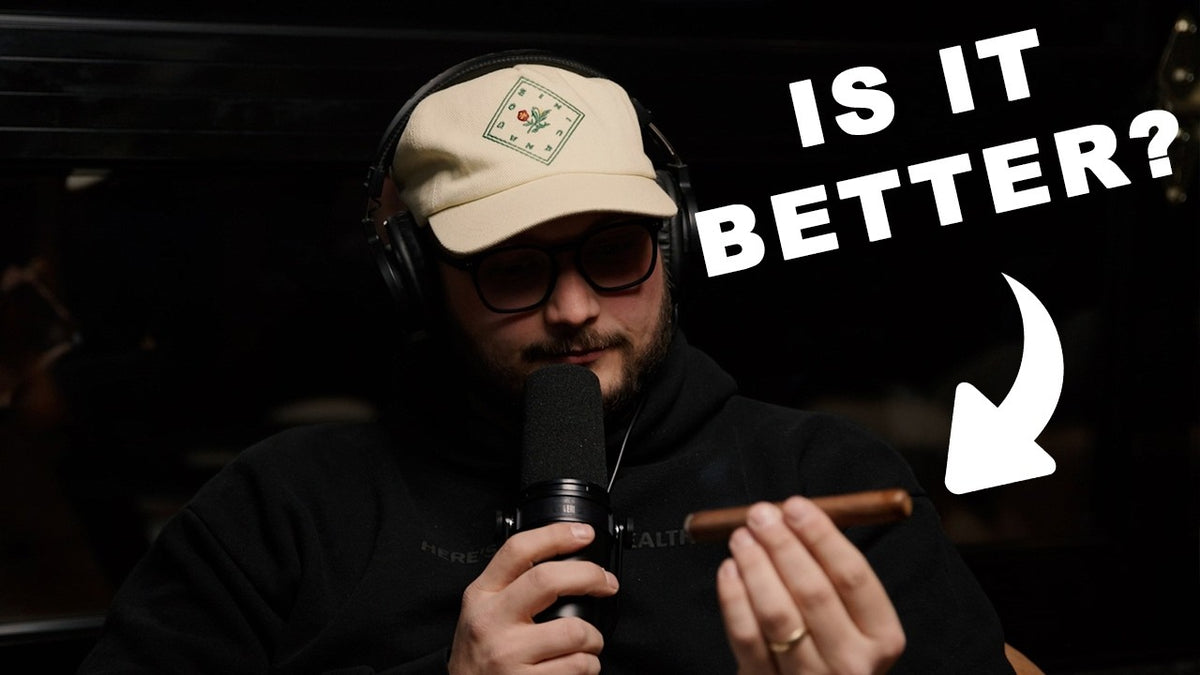
From Creekside Podcast Ep. 043: Does Humidity Really Affect Your Cigars? (Feat. Valet Humidity), aired Feb 20, 2026. Recorded at Creekside Cigar Co. in Maineville, Ohio.
On this Creekside Podcast, Dave reunites with Abe of Valet Humidity for a hands-on conversation about cigar storage, product innovation, and the culture around cigar smoking. They smoke cigars stored with different humidity packs, compare what they notice, and discuss why a small difference in storage may be worth exploring without treating one short tasting as a definitive answer. The conversation also gets into the real work of building a humidity business and the ways the cigar industry can better serve people.
Does 69% or 72% humidity change a cigar?
The crew sets up a simple comparison: two cigars of the same type, with one stored alongside a 69% humidity pack and the other with a 72% pack. The cigars had been stored that way for 48 hours. Dave and Abe smoke them side by side and share their impressions as they go.
Abe initially finds the 72% cigar darker and fuller, with what he describes as a wetter feel. He also notices more flavor up front and less spice, while the 69% cigar seems spicier to him. Dave agrees that the 72% smoke feels heavier and denser. These are impressions from this particular tasting, not a guarantee that every cigar will respond the same way.
There are important limits to the comparison. Although they are smoking the same cigar type, they are smoking different individual cigars, and the sticks may not have been identical to begin with. The test also covers just 48 hours. That makes it an interesting starting point rather than a controlled, long-term verdict on which humidity level is best.
Why does cigar construction matter during a tasting?
The humidity comparison leads to a practical point: flavor is only part of the experience if a cigar is difficult to smoke. Dave talks about how draw, smoke output, and a clean burn can shape whether someone enjoys a cigar enough to reach for it again. In his view, a well-constructed cigar at a regular price can make a stronger impression than a more expensive cigar that does not smoke consistently.
That perspective helps put the tasting in context. A cigar that goes out or has a difficult draw can distract from subtle differences in flavor or mouthfeel. Abe and Dave also acknowledge that keeping two sticks lit and comparing them in real time has its own challenges. Their discussion invites listeners to notice the whole smoking experience, not just search for tasting-note vocabulary.
What did Abe learn while building Valet Humidity?
Abe shares that his brother, who was studying chemistry, helped with the early humidity-pack formulations. Development took time: Abe bought equipment, worked on the process, and tested the product before launch. He explains that a manufacturing problem later arose when a supplier made packaging film incorrectly. The issue allowed too much moisture through the packs and affected the material.
The resulting inventory problem was especially difficult because much of the stock was being handled through Amazon. Abe describes trying to remove affected inventory while it was still becoming available in different warehouses. He says he contacted customers who reported problems, apologized, and reimbursed them for cigars that had been damaged. The experience led him to add more testing and quality checks.
His account is a reminder that a product launch is not the end of development. Manufacturing, fulfillment, and customer communication can all reveal problems that were not obvious during early tests. Abe and Dave compare notes on mistakes in their own operations and the value of fixing processes as a business grows.
How can cigar lounges and brands welcome more people?
The conversation broadens to innovation and access. Abe says he looks for everyday points of friction that might keep people from enjoying cigars, rather than creating a problem just to sell a product. He also argues that the industry can make its products easier to understand and improve them over time.
Dave focuses on the experience of visiting a cigar lounge. For newcomers, a lounge can feel unpredictable: they may wonder about the atmosphere, expectations, or whether they will feel welcome. Both speakers value the social connection cigars can create, but Dave says that connection should not depend on someone already knowing how a lounge works. Abe sums up his own ambition as bringing the industry to people, instead of expecting everyone to enter the industry on its own terms.
Key takeaways
- The 69% and 72% humidity comparison produced different impressions, but it was a short test with two different individual cigars.
- Draw, burn, and smoke output can strongly affect how enjoyable a cigar is.
- Valet Humidity's early manufacturing setback led Abe to strengthen testing and quality checks.
- Both speakers see room for cigar brands and lounges to reduce friction and make the experience more welcoming.
Shop, smoke and listen with Creekside
- Shop the cigars from this episode
- Join the Creekside Cigar Club for boutique cigars picked by our crew every month
- Visit our cigar lounge at 1381 US-22, Maineville, OH, open seven days a week
- Subscribe to the Creekside Podcast on YouTube and catch every episode


