

The Corojo Kings Sampler: Five Cigars That Prove Corojo Is King
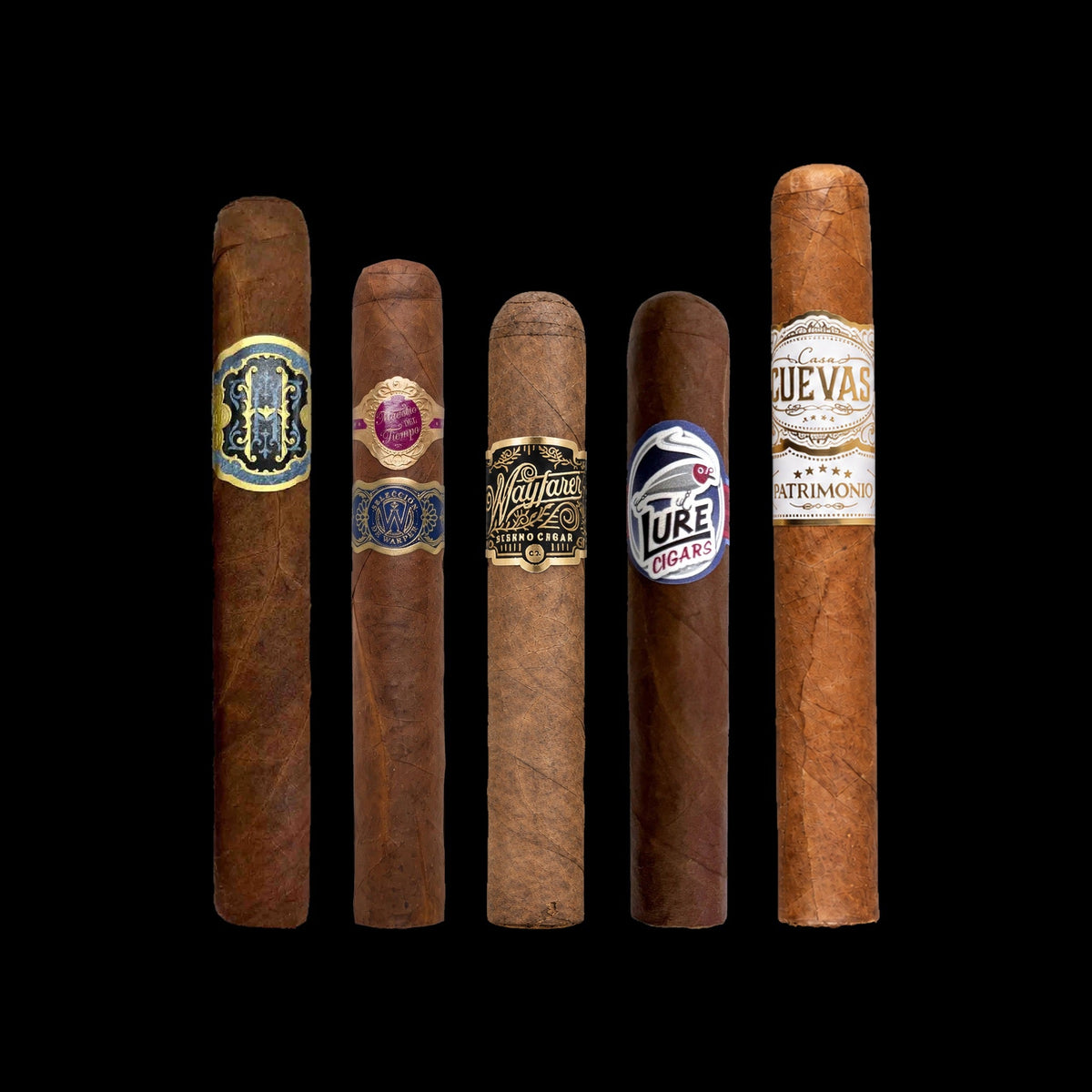
If you know, you know: Corojo is king. I put together the Corojo Kings Sampler to show what this leaf can do in five very different cigars, and here's the story behind each one.
Corojo is one of those words that gets thrown around a lot in the cigar world, and for good reason. It's sweet, it's spicy, it has that red-pepper bite on the finish, and when it's done right it gives you that classic Cuban-style character a lot of us chase. At Creekside, we're always looking for cigars that knock it out of the park with this wrapper. The Corojo Kings Sampler is five of my favorites, all in one box.
Where does Corojo come from?
Corojo started in Cuba. In the 1930s and '40s, Diego Rodriguez developed it at his El Corojo plantation near San Luis in the Vuelta Abajo, Cuba's most famous tobacco region. The farm took its name from a corojo palm growing on the property. By carefully selecting the best plants from every harvest, Rodriguez ended up with a wrapper leaf that a lot of people still consider the finest tobacco Cuba ever grew. For decades, it was the wrapper on some of the greatest Cuban cigars ever made.
The problem was that the original Corojo was fragile. It was very susceptible to diseases like blue mold and black shank, and growers could lose an entire crop. Cuba stopped growing it in the late 1990s and moved to hardier hybrids like Corojo 99 and Criollo 98. Those seeds, and the original Corojo itself, now grow in Nicaragua, Honduras and Ecuador. That's why the cigars in this sampler come with Corojo wrappers from three different countries.
What's in the Corojo Kings Sampler
Serino Wayfarer Robusto (5 x 52)
Carson Serino came up with the Wayfarer after a backpacking trip to Iceland, where the local shops carried almost nothing but Cuban cigars. He came home wanting to make his own take on that profile. Wayfarer is rolled at La Corona in Estelí, with an oily Ecuadorian Corojo '99 wrapper over a Jalapa Corojo '99 binder and Nicaraguan filler from Jalapa and Estelí. The Robusto is finished with a traditional Cuban Perilla cap. It's medium-bodied, with notes of pecan, leather, cinnamon, cayenne and milk chocolate. This is where I'd start.
Shop Serino Wayfarer Robusto
Warped Maestro del Tiempo 6102R (5 1/4 x 48)
Maestro del Tiempo means "master of time," and Kyle Gellis spent years working through Aganorsa's farms to build this blend. The 6102R has been off the market since 2020, and this return is capped at 400 cabinets of 100 cigars. It's an all-Nicaraguan puro made at Aganorsa Leaf, with a Jalapa Corojo 99 wrapper, a Condega binder, and a filler of Corojo 99, Criollo 98 and medio tiempo, the rarest and highest priming on the plant. Kyle calls the strength medium-plus. If you've never had one, don't wait on this one.
Shop Warped Maestro del Tiempo 6102R
Avowed Hallowed Hands Box Pressed Robusto (5 3/4 x 50)
Hallowed Hands honors the people and families who have perfected the craft of cigar making over generations. Each box carries 15 unique bands, as unique as a fingerprint. It's a lot of firsts for Avowed: their first dark Ecuadorian Corojo wrapper, their first box press, and their first line with three sizes. The binder is Ecuadorian Habano, and the filler is Corojo 99, San Vicente, Piloto Cubano, Criollo 98 and Pennsylvania Broadleaf. The Box Pressed Robusto gets extra Broadleaf to set it apart from the other two sizes. Every one is rolled at Kelner Cigars in the Dominican Republic by a single pair of rollers.
Shop Avowed Hallowed Hands Box Pressed Robusto
Lure Corojo Oscuro "The Fat Tony" (5 x 54)
The Fat Tony was a happy mistake. Lure meant to make a 5 x 50, and the cigars came back as a 5 x 54. They liked it so much they kept it. It uses Lure's Corojo Oscuro blend: a double-fermented, dark Corojo wrapper over a Nicaraguan binder, with filler from Estelí, Jalapa and Ometepe. It's medium-plus with a thick, satisfying smoke and notes of leather, baking spice, dried fruit, café con leche and a little orange peel. This is a great pick later in the day.
Shop Lure Corojo The Fat Tony
Casa Cuevas Patrimonio Toro (6 x 52)
Patrimonio means "patrimony," and it's one of the most personal cigars in the Casa Cuevas lineup. Luis Cuevas Jr. and his son Alec blended it as a tribute to Luis Cuevas Sr. and the family's five generations in tobacco. It's handmade at the family's Tabacalera Las Lavas factory in the Dominican Republic. A reddish Honduran Corojo wrapper covers an Ecuadorian Habano binder, with filler from the Dominican Republic, Nicaragua and Peru. Expect cream, cedar and white pepper up front, then baking spice, earth and coffee. It's the fullest of the five, so I'd save it for last.
Shop Casa Cuevas Patrimonio Toro
How to smoke the sampler
- Go in order. Start with the Wayfarer, then the Maestro del Tiempo and Hallowed Hands, and finish with the Fat Tony and the Patrimonio.
- Pay attention to the wrapper. You've got Ecuadorian, Nicaraguan and Honduran Corojo in one box. See which one you like best.
- Try one side by side. Smoke the Wayfarer and the Maestro del Tiempo on the same day. Both are built on Corojo 99 and Criollo 98, and they still taste completely different.
Get the Corojo Kings Sampler
The Corojo Kings Sampler is available now at Creekside. Grab one online, or stop by the shop and tell the crew which one was your favorite.
Dave Imber
Creekside Cigar Co.


