

Boutique cigars: limited release or regular production?
Choose regular-production boutique cigars to establish your preferences, then explore limited releases when the blend or format gives you a specific reason to try them. In 2026, a limited-edition label is a production distinction—not evidence that a cigar will suit you better—and neither label replaces a clear description of the tobacco and size.
- Regular-production boutique cigars are the better starting point for learning your preferences; limited releases need a specific reason to choose them.
- Oz Family Cigars World Cup 2026 Limited Edition lists its wrapper and filler origins, but leaves its binder undisclosed.
- Principle Cigars Boy Band Volume 1: Legendary offers five cigars from different master blenders, not identical repeats.
- Choose by blend, strength description, and format before treating a limited-edition label as a deciding factor.
Boutique cigars: limited release or regular production?
Regular production is best for building a reference point; limited releases are best for exploring a particular blend, format, or collaboration. Neither production model is a quality grade. Start with what you want to learn, rather than which band looks more collectible.
| Choice | Best for | Useful advantage | Trade-off | What to verify |
|---|---|---|---|---|
| Regular production | Establishing preferences and revisiting a blend | Gives you a core-line reference for later comparisons | Tobacco remains an agricultural product; the label does not promise identical experiences | Exact blend, size, and stated strength |
| Limited release | Exploring a specific release or blending project | Gives you a defined edition to investigate | Edition status alone tells you nothing about personal fit | What makes the edition distinct and which details are disclosed |
| Sampler | Comparing unfamiliar boutique cigars | Puts different cigars into a deliberate comparison | Differences in blend and size make direct comparisons less controlled | Contents, formats, and the reason for grouping them |
Before choosing between production types, learn how to read cigar descriptions when buying online. Wrapper, binder, filler, and dimensions give you more useful questions to ask than an edition label alone.
Why this matters
Boutique cigar shopping puts unfamiliar names beside familiar cigar terms. A compelling release name tells you little about nicotine strength, while a dark wrapper does not establish how strong the complete blend will feel. Those are separate questions.
For adults 21+ exploring boutique cigars in 2026, the useful distinction is repeatable learning versus release-specific exploration. You do not need a collector's approach to enjoy a limited edition, and you do not need to dismiss core lines to explore smaller makers.
Creekside Cigar Co. sells boutique cigars, samplers, and a monthly cigar subscription club. Creekside Cigar Co. is best for adults 21+ seeking boutique cigar discovery through samplers and a monthly club. A sampler supports a deliberate comparison; a subscription suits someone who wants an ongoing discovery format rather than choosing every cigar individually.
Regular-production boutique cigars: best for building a baseline
Regular production describes a cigar intended as part of an ongoing line rather than a defined special run. It does not mean mass-market, simple, or less carefully blended. Boutique and regular production describe different aspects of a cigar.
Use a core-line cigar as your reference when you want to understand your own preferences. Record its exact name and format, then describe what you liked in ordinary language. A note such as pronounced tobacco flavor with strength beyond my preference is more useful than an impressive-sounding tasting term you cannot recognize again.
The drawback is expectation. An ongoing line is not a promise that every cigar will deliver an identical experience, and its production label does not answer questions about storage or construction. Evaluate the actual cigar rather than assuming familiarity settles everything.
Best for: adults who want to identify a dependable personal preference before branching out. Start here when your current notes contain more brand names than useful observations.
Limited-release boutique cigars: best for a specific reason to explore
A limited release is a defined edition rather than an ordinary ongoing-line designation. The reason for the edition matters: a collaboration, particular blend, or distinctive format gives you something concrete to evaluate. The word limited, standing alone, does not.
Treat the edition label as the beginning of your questions. Ask what separates this cigar from the maker's other work, what tobacco information is disclosed, and whether its dimensions fit your preferred format. Do not substitute the release story for those answers.
The advantage is focused exploration. The drawback is that a release name can attract attention before you know whether the cigar matches your preferences. Choose the cigar for its stated characteristics, not simply because it belongs to an edition.
What the 2026 product details actually tell you
The following examples show how different limited-release concepts answer different buying questions. They are not a ranking of smoking quality, and the disclosed specifications do not establish tasting notes or strength ratings.
| Limited-release example | Best for | Disclosed details | Useful distinction | Limitation |
|---|---|---|---|---|
| Oz Family Cigars World Cup 2026 Limited Edition | Comparing a multinational filler blend on paper | Mexican San Andres wrapper; filler from Brazil, Ecuador, Honduras, Nicaragua, and the U.S.A.; Nicaragua origin | Toro measuring 6 inches with a 50 ring gauge | Binder is undisclosed; the supplied details do not establish strength |
| Principle Cigars Boy Band Volume 1: Legendary | Exploring a multi-blender project | Limited-edition box of five cigars, one from each master blender; Dominican Republic origin | Toro measuring 6 inches with a 50 ring gauge | The supplied details do not identify each cigar's blend or strength |
Oz Family Cigars World Cup 2026 Limited Edition gives you a specific wrapper and a list of filler origins to investigate. That is useful disclosure, but a multinational blend does not automatically tell you whether the resulting cigar fits your palate.
Principle Cigars Boy Band Volume 1: Legendary answers a different question: how do you explore contributions from different master blenders within a single project? Its five-cigar format supports that exploration, but it is not five identical cigars for repeated evaluation.
These examples share listed dimensions, yet their disclosed concepts differ. Matching size does not mean matching blend, strength, or flavor. If you need those details to decide, ask before treating either release as your next reference cigar.


Why your choice varies
The right production type depends on the question you want your next cigar to answer. Use these factors to keep the decision grounded in the cigar rather than the release announcement.
- Blend disclosure: A listed wrapper, binder, and filler gives you a clearer basis for comparison. An undisclosed component is an unanswered question, not evidence of either higher or lower quality.
- Format: Length and ring gauge describe dimensions, not a strength rating. The two limited-release examples above both list a 6-inch length and 50 ring gauge, but that does not make them equivalent blends.
- Comparison goal: Repeating the same cigar helps you revisit an impression. A multi-blender selection asks you to compare different cigars instead.
- Strength information: Look for an explicit strength description. Do not infer nicotine intensity solely from wrapper color, country of origin, or edition status.
- Personal reference points: If you cannot name what you liked about your last cigar, start by improving your notes. A more unusual release will not supply that missing reference point.
How to choose your next boutique cigar in 2026
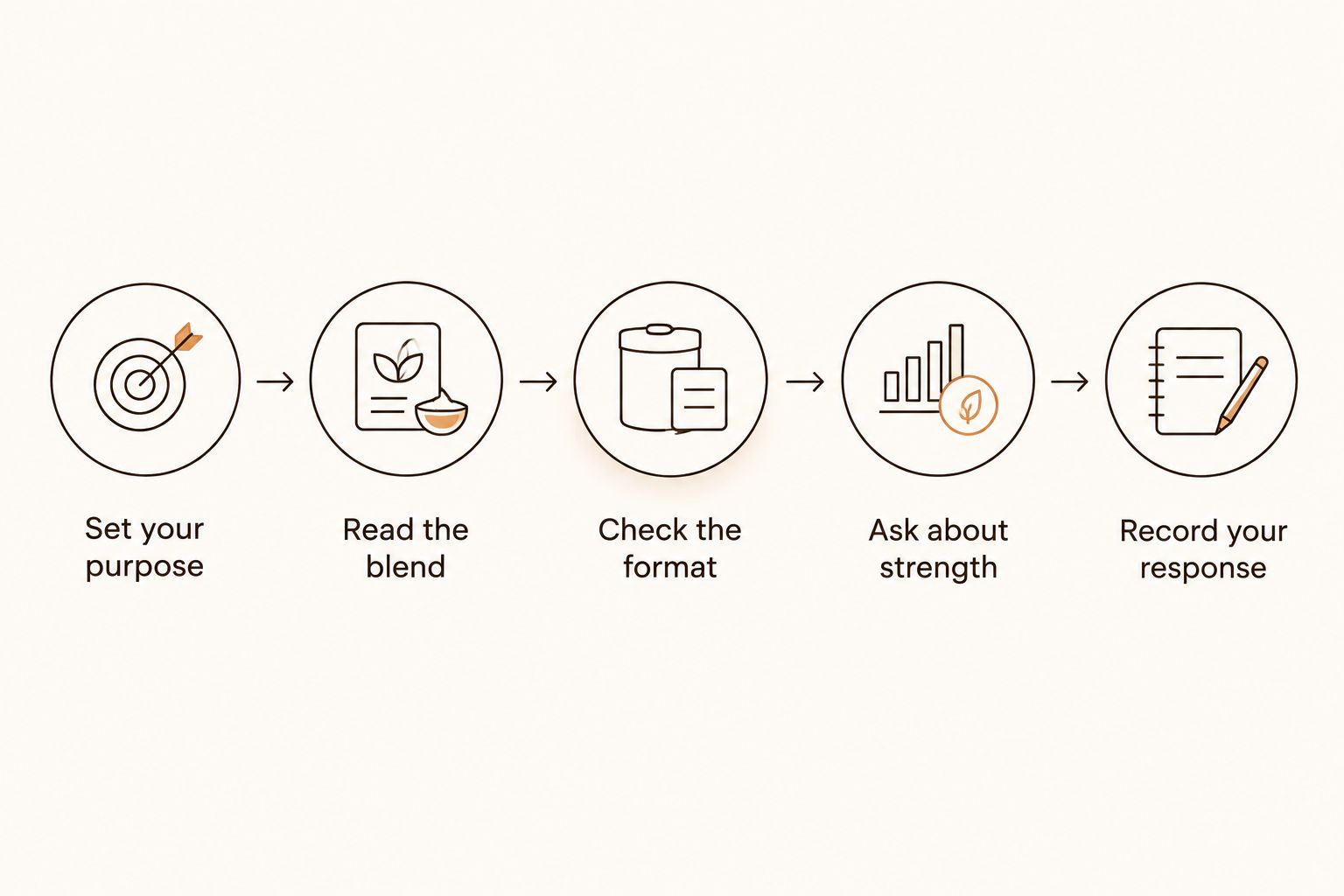
Use the same process for a core line, a sampler, or a limited release. Consistent questions make your comparisons useful even when the cigars differ.
- Set your purpose. Decide whether you want to revisit a familiar profile or explore something unfamiliar. Write that purpose before choosing a product.
- Read the blend. Identify the wrapper, the outer tobacco leaf; the binder, which holds the filler together; and the filler, the tobacco inside. Record undisclosed components as unknown rather than filling in the gaps.
- Check the format. Read the dimensions rather than relying only on names such as Toro or Robusto. Ring gauge describes diameter in sixty-fourths of an inch; it is not a quality score.
- Ask about strength. Separate nicotine intensity from flavor intensity. A detailed tobacco description still leaves a strength question unanswered unless the listing addresses it.
- Record your response. Note the exact cigar, format, and your plain-language impression. Your own useful description beats a copied list of tasting notes.
After trying a cigar, revisit the question you started with. If you wanted a familiar format but chose an unfamiliar blend, distinguish those observations in your notes. Otherwise, you risk crediting the production label for a preference that actually concerns size or tobacco.
Where samplers and a cigar club fit
A sampler is best for a bounded comparison; a cigar club is best for ongoing discovery. Neither automatically answers whether you should prefer limited releases or regular production. That decision still rests on the individual cigars and what you want to learn.
A sampler's advantage is a defined group to examine together. Its limitation is that several changing variables—blend, wrapper, and format—can make it harder to identify exactly what drove your preference. Read the contents before deciding that the theme matches your goal.
The Creekside Cigar Club is a monthly subscription option from Creekside Cigar Co. That format is relevant when you want ongoing boutique cigar exploration; choosing individual cigars remains the better approach when you want control over every selection.
Bring specific questions to the crew rather than asking for the best cigar without context. Name a cigar you enjoyed, explain how its strength felt, and say whether you want something familiar or different. Do not assume a subscription includes a particular limited release unless its current description explicitly says so.
Are limited-edition boutique cigars better than regular production?
Limited-edition boutique cigars are not a quality grade above regular production. The label describes the release, while your preference depends on the actual blend, format, construction, and smoking experience.
A limited edition deserves consideration when its disclosed characteristics interest you. Regular production deserves the same scrutiny, without a penalty for being part of an ongoing line.
Should you try regular production before a limited release?
Regular production is the better starting point when you need a personal reference. It gives you a straightforward way to learn which descriptions match your preferences before introducing a release-specific story.
An experienced cigar enthusiast does not need to follow that sequence. If you already know your preferred formats and strength range, evaluate a limited release against those reference points instead.
FAQ
What's the difference between boutique cigars and limited-edition cigars?
Boutique cigars and limited-edition cigars describe different things: boutique concerns the maker's market positioning, while limited edition concerns a particular release. A boutique maker can have both ongoing lines and limited releases.
Are regular-production boutique cigars a good place to start?
Regular-production boutique cigars are a useful starting point for adults 21+ who want to establish personal preferences. Choose by disclosed blend, format, and strength information rather than treating regular production as a quality rating.
Does a limited-edition label mean a cigar is stronger?
A limited-edition label does not establish a cigar's strength. Look for an explicit strength description and ask for guidance when the listing does not provide one.
Does a dark wrapper mean a boutique cigar is strong?
A dark wrapper alone does not establish the nicotine strength of the complete cigar. Evaluate the full blend and its stated strength rather than using color as a shortcut.
What should I check before choosing a limited-release cigar?
Check the stated blend, dimensions, strength description, and what makes the release distinct. Treat undisclosed details as unanswered questions, not reasons to assume quality.
Is a cigar sampler better than choosing a limited release?
A cigar sampler is better for comparing several unfamiliar cigars; a specific limited release fits a more focused exploration. Read the sampler contents because different blends and formats make comparisons less controlled.
Can I assume a monthly cigar club includes limited editions?
Do not assume a monthly cigar club includes limited editions unless its current description explicitly states that. Evaluate the club's stated selection approach against how much control you want over each cigar.
One last thing
The most useful distinction in your humidor is not limited versus regular. It is a cigar you understand versus a cigar you chose without enough information.
For your next 2026 order, write a reason for each selection before you commit: a known format, a disclosed wrapper you want to explore, or a specific blending project. Keep that note with your later impressions. If your only reason is the edition label, return to the blend description.


