

What Eight Years of Aging Does to a Crux Guild Cigar
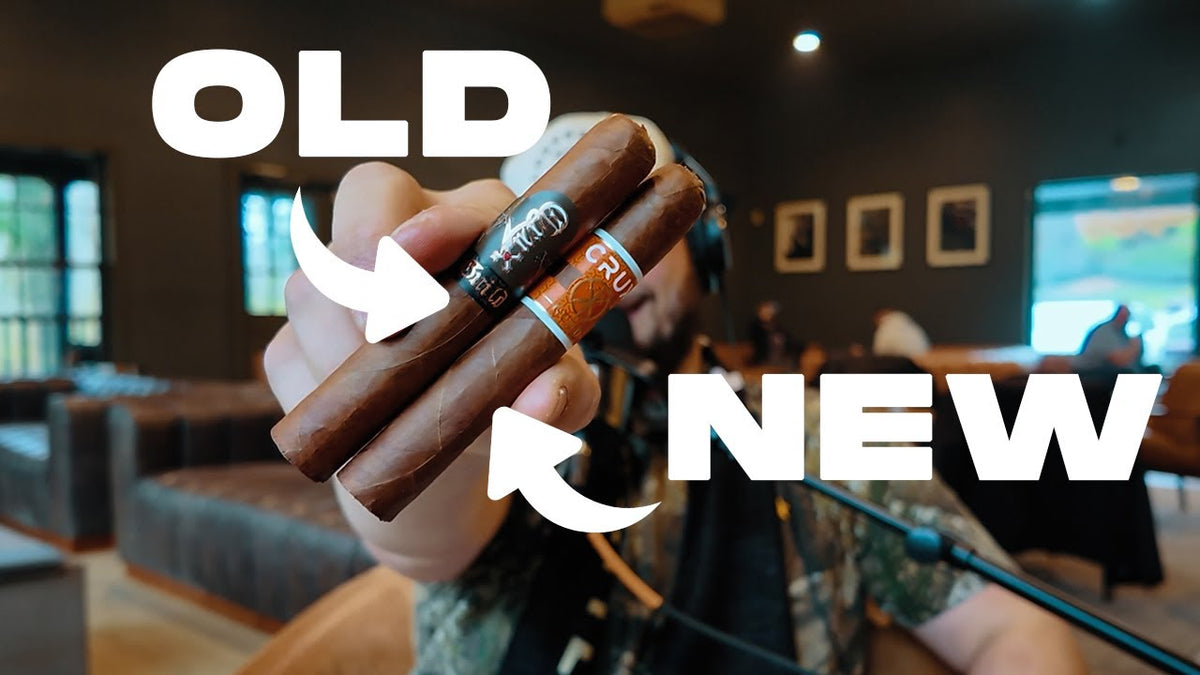
From Creekside Podcast Ep. 037: Does A Cigar Still Taste Good After 8 years? (Feat. Tony From Crux), aired Dec 05, 2025. Recorded at Creekside Cigar Co. in Maineville, Ohio.
On this episode of the Creekside Podcast, we sit down with Tony Hogan of Crux Cigars to smoke two versions of the Crux Guild side by side: one fresh and one roughly eight years old. We compare how the blend changes with time, talk about why cigar sizes can alter a blend’s character, and explore the relationships and hospitality that shape the cigar world.
How does an aged Crux Guild compare with a new one?
The Guild is Tony’s most-smoked cigar in the Crux portfolio and his go-to utility cigar. It has an Ecuadorian Habano wrapper with Nicaraguan binder and filler, and is made at Plasencia. Tony describes it as medium-bodied and versatile with different drinks and times of day.
Right away, we notice that the newer Guild carries more of the warm Habano spice and feels livelier. The older cigar seems to move sooner into a softer, toastier profile, with nutty, cedary, and sweet-leather qualities. As we smoke, the newer one shows warm spice, cedar, and a bright, almost citrus-like note. The aged Guild comes across with sweeter leather and baking spice, while its retrohale brings out cinnamon.
The two cigars still taste recognizably like the same blend. That matters: aging has shifted the experience without making the older cigar feel unrelated to the new one. Both show sweetness, and the ash holds together tightly. For us, the comparison makes a strong case for revisiting a cigar over time rather than assuming its flavor stays fixed.
What can cigar aging change?
Tony points out that the older Guild has mellowed in its spice, while Dave finds it especially sweet and toasty. The tasting is a reminder that aging does not simply mean a cigar becomes “better” in a universal sense. It can change which parts of a blend stand out. Someone who enjoys the newer cigar’s extra pep may prefer it fresh; someone drawn to the older cigar’s rounded sweetness and cinnamon may enjoy the aged version more.
That is part of the appeal of keeping cigars and returning to them later. Tony describes himself as a collector rather than a hoarder, and says he buys cigars he enjoys so he can smoke them again with time on them. He also recommends giving a cigar more than one try before judging it. Mood, setting, and what you have eaten can all affect how a cigar comes across.
Why do cigar sizes change the smoking experience?
The conversation also turns to vitolas and blend design. Even when a cigar uses the same tobaccos, changing its size changes the proportions of those tobaccos in each draw. That can shift the flavor and how the cigar develops. Dave shares an earlier comparison in which cutting a Toro shorter did not reproduce the experience of smoking a cigar made in a shorter size.
Tony says Crux aims for its cigars to remain fairly consistent across some sizes, but notes that the Guild Corona can come across spicier than the Robusto or Toro. He also explains that some blends do not work in every format. A smaller ring gauge or a longer vitola is not automatically a better match; the blend has to be designed for it. The conversation is a useful reminder to try different sizes with curiosity, while still choosing what you enjoy.
What do Crux’s choices say about the brand?
Tony traces Crux back to its 2011 founding and first cigar sales in 2014. He describes relationships with manufacturing partners, retailers, and cigar smokers as central to the company. The discussion also touches on Crux packaging: its five-packs use recycled paper, and refill bricks offer an alternative to keeping every cigar in a dress box. Tony frames those choices as practical ways to reduce packaging waste and manage costs.
Crux’s early releases also show a willingness to try unusual formats. Tony brings out a 7-by-33 double-tapered cigar from the company’s first releases, alongside a 4-by-32 handmade cigar. They were distinctive sizes, and the larger cigar drew attention, though Tony notes that its small format made it difficult to price in a way customers would value. Later in the conversation, he discusses the upcoming Passport and Marble Head Project, including the latter’s Cuban-inspired 109-style cap and sub-$10 target pricing mentioned in the recording.
Key takeaways
- The older and newer Crux Guild cigars share a recognizable profile, but age softens some spice and brings forward sweeter, toastier notes.
- Aging can change a cigar’s balance; whether that change suits you is a matter of personal taste.
- Vitola affects how a blend smokes, because the tobacco proportions and burn experience change with size.
- Trying a cigar more than once and keeping personal tasting notes can help you understand your preferences.
Cigars from this episode
- Crux Guild: Compared fresh and roughly eight-year-old versions; the older cigar is softer, sweeter, and toastier.
- Crux Bull and Bear: Discussed as a balanced, full-bodied cigar with Jalapa wrapper and Nicaraguan tobaccos.
- Crux Epicure Connecticut: Mentioned as the first cigar smoked by a Creekside shop visitor.
- Crux Passport: Discussed as a returning cigar with an Ecuadorian Habano wrapper and a floral profile.
- Crux Marble Head Project: Discussed as a forthcoming cigar with a Cuban-inspired 109-style cap and sub-$10 target pricing.
- Crux 7-by-33 double-tapered first-release cigar: Tony describes it as one of Crux’s first releases and an unusual format.
- Crux 2018 Limitatas: Tony says the older cigars being discussed at Creekside were smoking delicious.
Shop, smoke and listen with Creekside
- Shop the cigars from this episode
- Join the Creekside Cigar Club for boutique cigars picked by our crew every month
- Visit our cigar lounge at 1381 US-22, Maineville, OH, open seven days a week
- Subscribe to the Creekside Podcast on YouTube and catch every episode


